Impaired-Driving Truck Accidents: Legal Guidance for Victims Pursuing Compensation in Georgia
When a commercial driver is impaired, the consequences of the resulting truck accident can be catastrophic, especially on Georgia’s busy interstates and highways: the size and momentum of large trucks turn mistakes into life-changing injuries. This guide walks victims and families through the legal landscape in Georgia and the steps needed to protect recovery rights. You’ll learn how impairment is defined in the trucking context, how federal rules like CDL BAC limits and FMCSA testing affect evidence, why impairment increases truck accident severity, who may be legally responsible under Georgia law, and what immediate actions preserve key proof. We outline investigative priorities: ELD data, toxicology, maintenance, and employment records, and describe the civil-claims process from intake through trial preparation in Georgia courts. If legal help is needed, our skilled personal injury lawyers in Georgia can explain how representation streamlines evidence collection and advances claims so you can focus on recovery.
What Is Impaired Driving in the Trucking Industry?
In trucking, impaired driving means a commercial operator’s ability to control a heavy vehicle is significantly reduced by alcohol, illegal drugs, prescription or over-the-counter medication, or physiological conditions such as fatigue. Impairment degrades perception, slows reaction time, and weakens decision-making, all of which increase stopping distance and raise the risk of lane departures or truck accidents. Commercial drivers are subject to CDL-specific federal rules, including a lower alcohol threshold and FMCSA testing protocols that create post-accident evidence pathways. These federal regulations are strictly enforced in the state of Georgia. Knowing these definitions helps truck accident victims and investigators identify which records matter and what legal theories may apply under Georgia law.

Which Substances and Conditions Cause Truck Driver Impairment?
One study shows common contributors to truck crashes include alcohol, which raises BAC and slows motor and cognitive function; illicit stimulants or depressants that alter judgment and coordination; prescribed drugs that can cause drowsiness or delayed responses; and fatigue, which produces performance deficits similar to alcohol intoxication. Toxicology and metabolite results can show recent use but must be interpreted carefully because some substances remain detectable long after impairment has passed. Witness accounts, dash-cam footage, and ELD anomalies, unexpected driving hours or unexplained breaks, often corroborate impairment when toxicology alone is unclear. Identifying these differences guides which records to secure promptly and points to the federal rules that follow, which are critical in Georgia truck accident litigation.
What Federal Regulations Govern Impaired Truck Driving?
The FMCSA sets rules requiring regulated carriers to run drug and alcohol testing programs, mandates post-accident testing in many serious crashes, and enforces hours-of-service (HOS) limits to reduce fatigue risk. For CDL holders, the enforcement alcohol limit is lower than for passenger vehicles, and carriers must keep testing records, refusals, and return-to-duty documentation. FMCSA post-accident testing triggers, such as injuries requiring immediate medical treatment or disabling vehicle damage, can yield objective toxicology and breath test results linking impairment to a collision. Understanding these federal rules helps victims and their Georgia legal counsel request specific company records and regulatory reports during an early investigation, which the next section discusses in relation to crash severity and harm.
Why Are Impaired Driving Truck Accidents So Devastating?
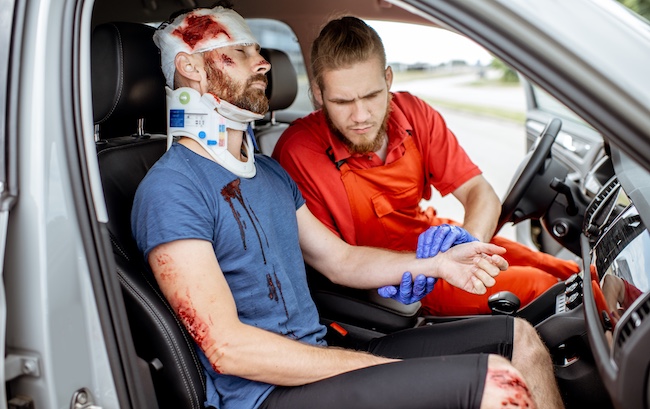
Impaired truck accidents are especially destructive because impairment compounds the physics of large commercial vehicles: heavy mass, long stopping distances, and limited maneuverability turn even small errors into catastrophic outcomes. Slowed reactions or poor spatial judgment at highway speeds can cause severe intrusion into passenger compartments, rollovers, and crushing forces. Truck accident victims commonly suffer traumatic brain injuries, spinal cord damage, amputations, and fatalities; economically, they face immediate medical bills, long-term care needs, and lost earning capacity. Understanding how impairment degrades driver performance clarifies both the likely harm and the damages injured parties should expect to pursue under Georgia law.
How Does Impairment Affect Truck Driver Performance?
Impairment undermines essential driving tasks: hazard recognition is delayed, reaction times lengthen, lane-keeping and speed control deteriorate, and complex decisions under pressure become unreliable. Alcohol and sedating medicines depress the central nervous system, reducing coordination and response speed; stimulants can produce risky overconfidence and erratic handling. Fatigue, often a function of scheduling or HOS violations, can cause microsleeps and attention lapses comparable to significant BAC impairment in driving studies. Recognizing these deficits helps investigators link ELD records, dash-cam footage, and witness accounts to physiological evidence of impairment, which is crucial for proving negligence in a Georgia court.
What Types of Injuries and Damages Result from These Accidents?
Severe injuries from impaired truck crashes typically require multi-disciplinary care, lengthy rehabilitation, adaptive equipment, or lifelong attendant support, creating substantial economic losses and deep non-economic harm. Economic damages under Georgia law include past and future medical expenses, rehabilitation, assistive devices, home modifications, and lost income or reduced earning capacity. Non-economic damages from truck accidents can compensate for pain and suffering, loss of enjoyment of life, and emotional trauma. In extreme cases, punitive damages may be available where conduct shows conscious indifference to safety, as defined by Georgia statute. Projecting future needs usually depends on medical experts, life-care planners, and vocational specialists; the evidence required for each damage category is discussed in the compensation section that follows.
Who Is Legally Responsible for Impaired Driving Truck Accidents in Georgia?

Multiple parties can be liable for the truck accident depending on the facts: the driver for personal negligence; the employer under Georgia’s vicarious liability doctrine when the driver acted in the scope of employment; and carriers or third parties for negligent hiring, supervision, maintenance failures, or improper loading. Georgia courts consider whether an employer knew or should have known about risks, such as prior substance abuse, ignored drug-testing policies, or chronic HOS violations, and whether corporate practices contributed to the impairment. Identifying responsible parties requires targeted document and witness discovery to obtain personnel files, drug-testing histories, maintenance logs, and load manifests. The table below compares typical defendants, liability theories, and the evidence that supports those claims in Georgia.
| Potential Defendant | Basis for Liability (Georgia Law) | Typical Evidence |
|---|---|---|
| Truck Driver | Personal negligence; operating while impaired or fatigued | Toxicology reports, arrest records, breathalyzer results, witness statements |
| Trucking Company | Vicarious liability (respondeat superior); negligent hiring, training, or supervision | Employment files, background checks, drug-testing policies, training records |
| Owner-Operator | Contractual liability or independent negligence when operating under carrier control | Lease agreements, maintenance records, insurance contracts |
| Loader/Manufacturer | Negligent loading or equipment defects contributing to the crash | Loading manifests, securement records, maintenance and inspection logs |
How Are Truck Drivers Held Accountable for Impaired Driving in Georgia?
Drivers are held civilly liable when evidence shows they breached the duty to operate safely and that breach caused injury. Key evidence includes toxicology and breath tests, field sobriety results, official crash reports, and eyewitness accounts. Criminal DUI or DWI convictions in Georgia often strengthen a civil case, but civil liability is decided on negligence, duty, breach, causation, and damages. Investigators use ELD/HOS logs and dash-cam footage to corroborate erratic driving or scheduling pressure that coincides with impairment. Timing matters: linking toxicology windows, metabolite data, and observed driving behavior helps Georgia juries and judges determine whether impairment existed at the collision moment.
When Can Trucking Companies Be Liable for Impaired Drivers in Georgia?
Companies can be liable under Georgia law when negligent hiring, failure to enforce drug and alcohol policies, ignored background red flags, or HOS violations create a foreseeable risk of impairment. Employers may also be directly liable if poor maintenance or unrealistic schedules promote fatigue, while vicarious liability applies when drivers act within employment scope. Proving corporate liability typically requires subpoenas for personnel files, drug-testing logs, dispatch and payroll records, and maintenance histories to show systemic problems or policy lapses. Those corporate records often determine whether a truck accident case can recover compensation beyond a single driver’s limited assets.
How Can Victims Seek Compensation After an Impaired Truck Driver Accident in Georgia?
Victims pursue compensation by filing negligence claims against the driver and any liable corporate or third-party actors, seeking economic, non-economic, and in some cases punitive damages tied to impairment and employer culpability. Recoverable items under Georgia law include medical expenses, lost wages, future care needs, pain and suffering, and in wrongful death cases, funeral costs and loss of consortium. Punitive damages may be available when conduct shows reckless indifference. Immediate protective steps: getting medical care, preserving evidence, documenting losses, and consulting counsel, safeguard rights and time-sensitive records like blood draws and ELD data. The table below maps common damage types to what they cover and the evidence typically used to support each claim in Georgia.

| Type of Damages (Georgia Law) | What It Covers | Typical Evidence |
|---|---|---|
| Economic Damages | Past and future medical care, rehabilitation, lost income | Medical bills, treatment plans, wage statements, life-care plans |
| Non-Economic Damages | Pain and suffering, emotional distress, loss of enjoyment | Testimony, psychological evaluations, daily activity records |
| Punitive Damages | To punish especially reckless or egregious conduct (O.C.G.A. § 51-12-5.1) | Company policy violations, prior similar incidents, internal communications |
| Wrongful Death Damages | Funeral expenses, loss of financial support, loss of companionship (O.C.G.A. § 51-4-1 et seq.) | Death certificate, dependency evidence, financial records |
What Types of Damages Are Available in Impaired Truck Accident Claims in Georgia?
Economic damages caused by a truck accident compensate quantifiable losses: emergency care, surgeries, prosthetics, medication, ongoing therapy, and lost wages; experts typically project future medical and earning needs. Non-economic damages address subjective but real harms: pain, psychological trauma, and lost life enjoyment, and rely on compelling narrative evidence backed by medical records. Punitive damages may apply when impairment stems from conscious recklessness or systemic employer misconduct showing indifference to safety, as defined by Georgia’s punitive damages statute. Accurate damage totals depend on medical and vocational experts, life-care planners, and credible lay testimony about how the injury changed daily life. That preparation supports settlement negotiations or trial strategies.
How Do Wrongful Death Claims Work in Impaired Truck Accidents in Georgia?
Wrongful death claims in Georgia let certain survivors recover for economic and non-economic losses after a fatal truck crash; Georgia’s Wrongful Death Act determines who may file and what damages are available. Survivors commonly seek funeral expenses, loss of financial support, and loss of consortium. Criminal convictions can strengthen a civil wrongful death case, but are not required; civil actions proceed on a preponderance of the evidence. Georgia’s statutes of limitation and filing requirements make early counsel critical to preserve claims and time-sensitive evidence such as post-accident toxicology, crash reports, and employer records. Demonstrating employer liability in wrongful death cases can substantially increase the recovery available to grieving families, which leads to the procedural roadmap below.
What Is the Legal Process for Impaired Driving Truck Accident Cases in Georgia?
Most truck accident cases follow clear phases: initial intake and investigation, evidence preservation and discovery, negotiation and settlement efforts, and litigation with trial preparation if needed. Early work focuses on preserving blood and toxicology samples, obtaining ELD/HOS logs, securing dash-cam and telematics data, and sending spoliation-preserving letters to carriers. Negotiations rely on a coherent narrative tying impairment evidence to catastrophic injuries and on expert valuations of damages; litigation readies depositions and exhibits that make technical data understandable to jurors in Georgia courts. The table below maps process phases to the key actions and parties involved so victims know what to expect.
| Phase | Key Actions | Who/What Is Involved |
|---|---|---|
| Initial Consultation & Triage | Medical stabilization, preserve scene evidence, identify witnesses | Victim, medical providers, eyewitnesses, first responders |
| Investigation & Preservation | Obtain ELD, toxicology samples, maintenance logs, employment files | Forensic experts, subpoena powers, Georgia law enforcement records |
| Negotiation & Settlement | Demand package preparation, expert reports, mediation | Plaintiffs’ counsel, defense counsel, insurers, experts |
| Litigation & Trial Preparation | Depositions, trial exhibits, jury instructions (Georgia Civil Practice Act) | Trial counsel, expert witnesses, Georgia court filings |
What Evidence Is Crucial to Prove Impairment and Liability in Georgia?
Priority evidence includes timely toxicology and BAC results with an unbroken chain of custody; ELD/HOS records showing hours and anomalies; dash-cam or surveillance footage of driving behavior; maintenance and inspection records revealing mechanical issues; and driver employment files that show prior violations or substance-use history. Early collection is essential because blood samples degrade, devices can be overwritten, and employers may fail to preserve records without legal demand; preservation letters and subpoenas are standard tools in Georgia. Expert analysis, by toxicologists, pharmacologists, accident reconstructionists, and vocational life-care planners, translates raw data into courtroom-ready opinions linking impairment to causation and damages. Below are immediate actions victims should take.
- Get emergency medical care and keep thorough records of all treatment and diagnoses.
- Preserve the scene: photograph vehicles, injuries, and road conditions as soon as you safely can.
- Collect witness names and contact information and preserve any video or phone footage.
- Contact a personal injury lawyer quickly so preservation letters and subpoenas can secure time-sensitive records.
Why Choose The Weinstein Firm for Your Impaired Truck Accident Case in Georgia?

The Weinstein Firm is an Atlanta-based personal injury practice that focuses on truck collisions with a client-first approach, tenacious advocacy, and the investigative resources these cases require in Georgia. We offer a free case review and handle cases on contingency so clients pursue claims without up-front attorney fees. Our focus on truck cases aligns investigations with FMCSA and DOT evidence needs, ensuring subpoenas target critical records like ELDs, drug-testing logs, and maintenance histories.
What Unique Benefits Does The Weinstein Firm Offer Impaired Driving Victims in Georgia?
The Weinstein Firm offers a client-first approach starting with a free case review to triage medical and evidentiary needs and advise on immediate preservation steps. We work on a contingency-fee basis, so you pay no attorney fees unless we secure recovery. During the investigation we focus on time-sensitive records: post-accident toxicology, ELD/HOS data, maintenance logs, and driver personnel files, and retain specialists like accident reconstructionists and medical experts to interpret technical evidence for Georgia courts. Our advocacy prioritizes immediate needs, such as access to medical care and interim benefits, while building a comprehensive damages case for settlement or trial. That structure reduces the practical burden on injured people and families so they can concentrate on healing while we pursue legal remedies in Georgia.
How Has The Weinstein Firm Successfully Secured Compensation for Clients in Georgia?
Illustrative, anonymized outcomes show how focused investigation and aggressive negotiation turn impairment evidence into meaningful recoveries: in complex matters, we have assembled toxicology, ELD, and maintenance records with expert analysis to secure settlements that cover long-term medical and rehabilitation needs. Those outcomes reflect a process of early preservation, targeted subpoenas, expert synthesis of technical data, and persistent negotiation informed by a likely trial narrative in Georgia courts. Timelines depend on case complexity, but early engagement accelerates evidence collection and resolution. By prioritizing client needs and assembling technical proof, we work to restore financial stability and support long-term care planning for injured victims in Georgia.
- Early preservation and expert investigation: Secures the records that prove impairment and causation.
- Comprehensive damages valuation: Uses medical and vocational experts to quantify future needs realistically.
- Tenacious negotiation with readiness to try cases: Strengthens settlement leverage and protects client interests.
Frequently Asked Questions
What should I do immediately after an impaired driving truck accident in Georgia?
First, protect your safety and health. Seek emergency medical care for any injuries, even those that seem minor, and keep detailed records of all treatment. Photograph the scene, vehicle damage, and your injuries when possible. Gather witness names and contact information and preserve any video footage. Contact a personal injury lawyer promptly so time-sensitive evidence like toxicology samples and ELD data can be preserved according to Georgia legal requirements.
How can I prove impairment in a truck accident case in Georgia?
Proving impairment usually requires multiple evidence sources: toxicology reports showing BAC or drug presence, ELD records indicating HOS violations, and dash-cam footage capturing erratic driving. Witness statements and officer reports also help. Experts, such as toxicologists or accident reconstructionists, often translate technical evidence into opinions that link impairment to the driver’s performance at the time of the crash, which is essential for a Georgia jury.
What role do trucking companies play in impaired driving cases in Georgia?
Trucking companies can be liable for a truck accident under Georgia law if they fail to enforce drug and alcohol policies, neglect proper background checks, or create conditions that encourage fatigue. They may also be vicariously liable when a driver acts within the scope of employment. Investigating hiring practices, training, dispatch, and maintenance records is critical to determine corporate responsibility in Georgia.
What types of compensation can victims expect after an impaired driving accident in Georgia?
Victims can seek economic damages for medical care, rehabilitation, and lost earnings; non-economic damages for pain and suffering and emotional loss; and, in cases of egregious conduct, punitive damages as defined by Georgia law. The amount and types of recovery depend on injury severity, life impact, and the evidence supporting the claims, so thorough documentation and expert testimony are essential.
How long do I have to file a claim after an impaired driving accident in Georgia?
In Georgia, the statute of limitations for personal injury and wrongful death claims is generally two years from the date of the accident. Because deadlines and procedural requirements differ, consult a personal injury lawyer promptly to preserve evidence and avoid forfeiting your claim.
Can I still recover damages if I was partially at fault for the accident in Georgia?
In Georgia, yes, under the modified comparative negligence rule. A plaintiff can recover damages as long as their fault is less than 50%. If you are found 50% or more at fault, you are barred from recovery. If you are less than 50% at fault, your damages will be reduced by your percentage of fault. The specifics vary by jurisdiction, so a strong factual and evidentiary presentation is important, especially when the other party was impaired.
Conclusion
Impaired-driving truck accidents raise complex medical, investigative, and legal issues for victims and families in Georgia. Timely evidence collection, clear documentation of damages, and experienced legal representation materially improve the chance of securing fair compensation for medical care and long-term needs. If you or a loved one has been injured in a truck accident in Georgia, including Atlanta, Alpharetta, Conyers, Decatur, Dunwoody, Fayetteville, Johns Creek, Kennesaw, Lawrenceville, McDonough, Newnan, Roswell, or Watkinsville, The Weinstein Firm is ready to help. Our experienced truck accident lawyers will review your case, explain your rights under Georgia’s comparative fault laws, and fight to secure the maximum compensation you deserve. Do not face complex accident claims on your own—contact The Weinstein Firm today for a free consultation at 770-HELP-NOW.